
Relocation
Machine relocation
The easiest items to underestimate are re-leveling, exhaust back-pressure and the cooling loop — not the lift itself. F1, F2 and F5 follow the same order.
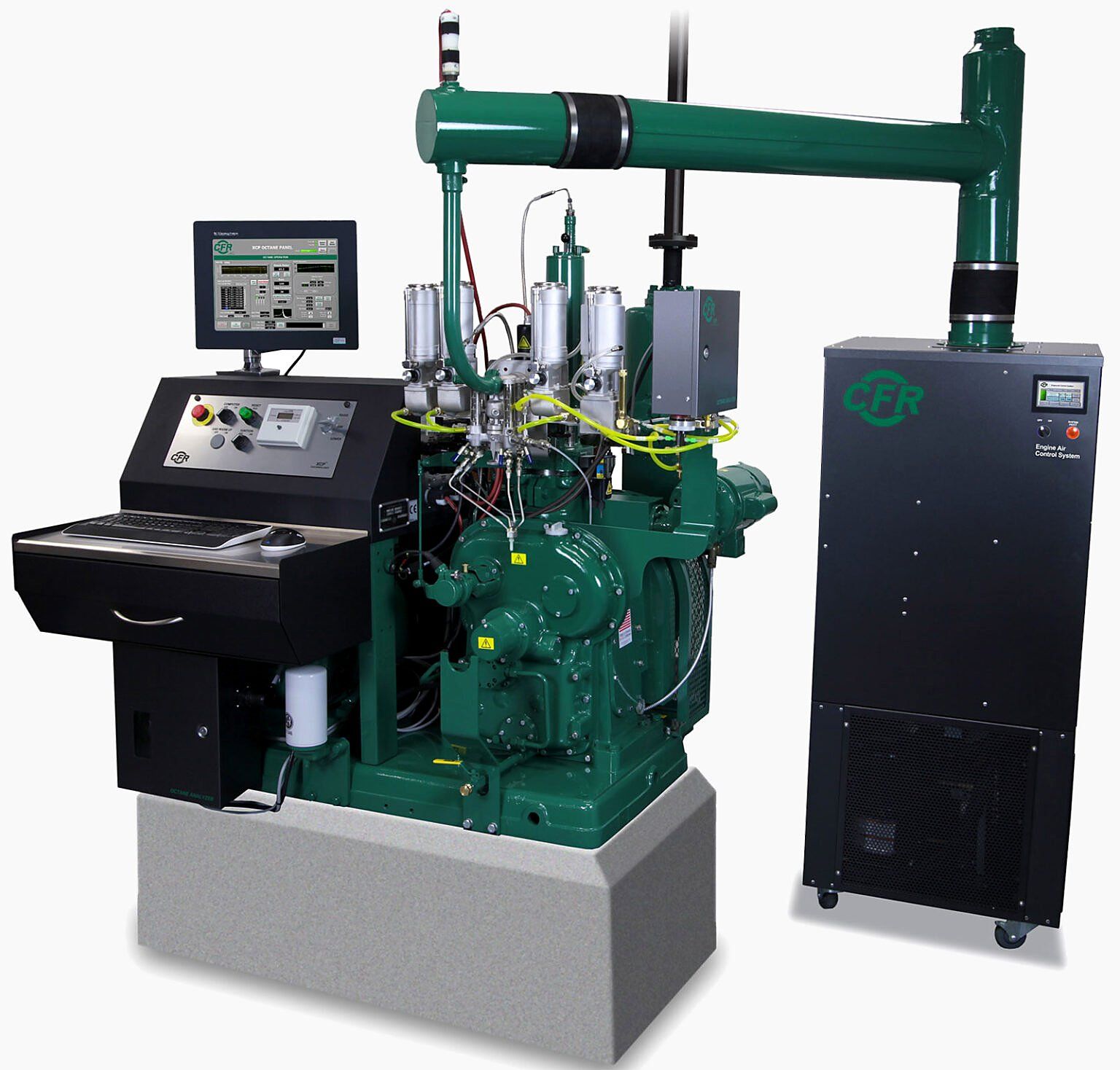
- 01
Survey the new site
Foundation, doorways, lift height, exhaust path, cooling water, power, fuel cabinet and intake source. Photos cost less than reworking pipes later.
- 02
Mark before disconnect
Wire numbers, water direction, bowl/line mapping, sensor positions. Note whether a combination unit was left on research or motor method.
- 03
Secure for transport
Protect crankshaft, rockers and precision instruments separately. Knockmeters and delay meters do not ride in the same undamped crate as the block.
- 04
Place and level
Even footing load. Distortion can make barring feel tight without a bearing fault.
- 05
Water, power, fuel, exhaust
Pressurize the cooling loop for leaks before ignition. Do not improvise exhaust back-pressure with an unsuitable hard pipe.
- 06
Bar and run-in
Only enter run-in observation when cold barring feels normal. Do not force a start against hard barring.
- 07
Reference-fuel check
Use the laboratory’s own references for relative position; confirm zero, temperature and compression ratio are rateable. Formal reports remain the laboratory’s.
Relation to repair
A move is not an overhaul — but known leaks should not travel
If head seepage, carburetor cross-feed or large handwheel backlash already exists, we recommend fixing before transport, or making it the first task after unpacking. These are not buried inside a “relocation lump sum”.
Related: octane inspection, cetane inspection.
Next step
Tell us the engine model, the symptom, and the last rating run
A nameplate photo helps: research method, motor method, or cetane, and where the reading drifts.